My Story / A Life in Layers
A life shaped by different points of view.
I started in medicine. What followed moved through business, healthcare leadership, different cultures and biomedical innovation. Each chapter changed what I noticed, and how I understood the next.
01 / The first outlines
I was trained to see one side. My career introduced me to others.
I've never found it easy to describe myself through a single title. I trained as a doctor, yet began my professional career in pharmaceutical sales and marketing with international companies including Servier and Stiefel Laboratories.
That change of setting mattered. Medical training encouraged careful observation, questions and a disciplined response to uncertainty. Commercial healthcare required me to understand markets, relationships and what makes people respond to an idea. A clinical decision could appear quite different when seen from the other side of the conversation.
Later, working in healthcare-services marketing and business development, I saw a similar distinction. What an organization believes it offers and what people actually experience are not necessarily the same. In healthcare, where ethics, trust and professional obligations must sit alongside commercial goals, that distinction deserves particular care.
I didn't set out to assemble a career across disciplines. One responsibility led to another, and each exposed questions that the previous role had not prepared me to answer. Looking back, I see layers of understanding rather than a career mapped out in advance.
02 / A world of different perspectives
Different places taught me to question what I thought was obvious.
I grew up in the Middle East and later worked and studied in Pakistan, Saudi Arabia and Denmark. Across my professional life, I have worked alongside people from more than 70 nationalities. The number is less important to me than what those relationships have revealed: people can share a workplace while bringing very different expectations of authority, responsibility, time, communication and trust.
Saudi Arabia was a meaningful chapter in my development. My work in healthcare administration brought together clinical and nonclinical teams, operational management, staff development, quality, patient safety and infection prevention. It also brought the practical challenge of aligning people whose training, language and professional assumptions were not always the same.
A policy can be carefully written and still be difficult to put into practice. A standard can be sound and still need explanation, adaptation and commitment from the people responsible for it. Working in multicultural healthcare environments made me more conscious of the difference between issuing an instruction and creating shared understanding.
These experiences did not teach me that I can predict how people will think because of where they come from. They taught me the opposite: to be more curious about the individual, more careful with assumptions and more willing to listen before deciding what a situation means.


03 / Different lenses
Every discipline changes what you notice.
My work expanded beyond pharmaceuticals into fundraising, specialized healthcare marketing, partnerships, medical devices and organizational leadership. Each area gave me a different reason to ask the same question: what matters to the person on the other side of this decision?
Fundraising brought the importance of purpose and trust into sharper focus. Marketing healthcare services required care with evidence, patient expectations and professional boundaries. Medical-device business development added the practical relationship between clinical needs, products, adoption and the market.
I became involved in hospital information systems, performance monitoring, regulation, accreditation, systems reviews, process audits and process development. These functions can sound disconnected until you see them operating in the same organization. The person delivering care, the person responsible for financing it, the person auditing standards and the person building the system often see different pieces of one problem.
I have become interested in the gaps between those perspectives. Sometimes an obstacle does not belong neatly to any single department. Understanding it takes more than one kind of expertise and, often, more than one conversation.
04 / The weight of responsibility
Leadership made the consequences more immediate.
Taking responsibility for teams and organizations changed the stakes of a decision. An apparently sensible plan can make life harder for the people expected to deliver it. A process can look orderly on paper and still be confusing in practice.
I learned to take operational evidence seriously without mistaking it for the whole story. Financial reports, performance dashboards, audits and accreditation assessments are valuable. So are the people who know what really happens between one reported milestone and the next.
It is tempting to begin with the proposed solution. I have found it more useful to investigate the underlying problem: what is intended, what is actually happening, where expectations differ and which constraints have been overlooked.
Sometimes the contribution is a new system or a more disciplined process. Sometimes it is simply helping people see the same problem together. Neither comes from a job title alone.
05 / Learning to look again
Denmark expanded the picture beyond the classroom.
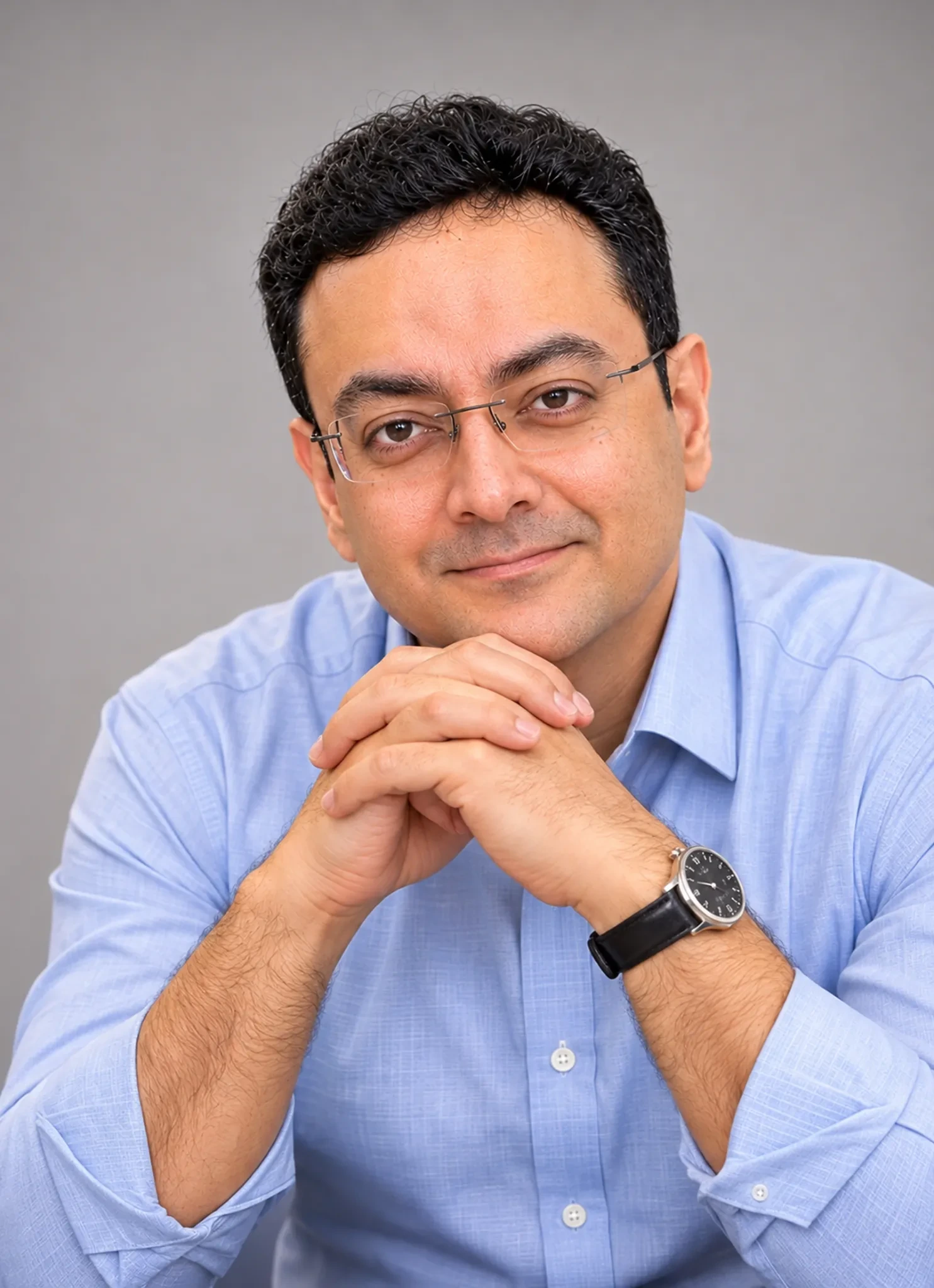
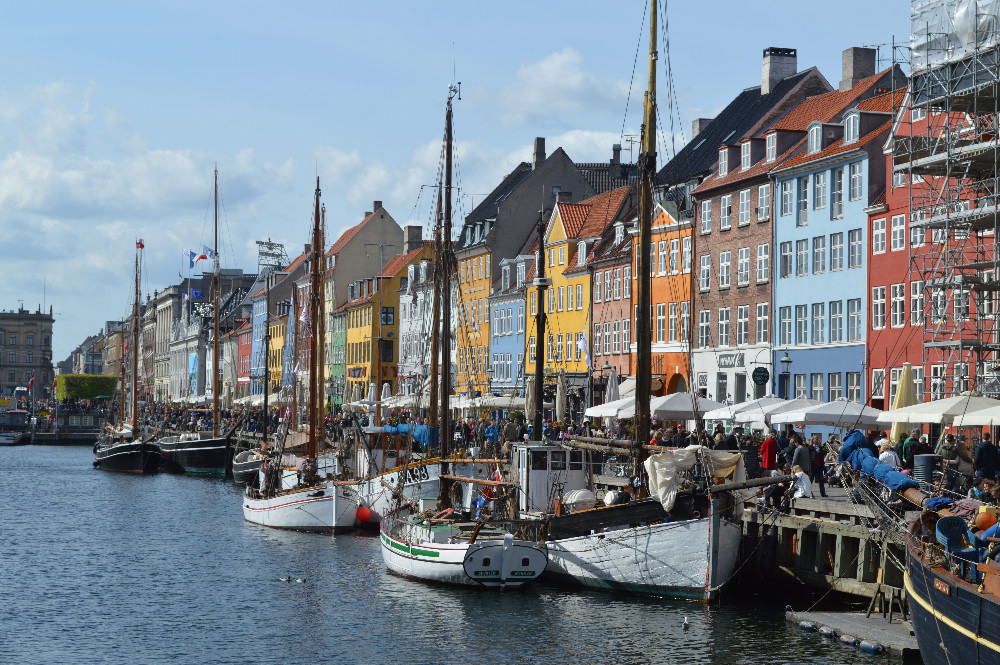
The Novo Nordisk Foundation's BioMedical Design Programme, associated with Aarhus University and the University of Copenhagen, brought me into an interdisciplinary environment where clinicians, engineers, researchers, designers and entrepreneurs approached healthcare problems from different starting points.
Clinical immersion meant observing healthcare delivery and workflows before proposing a solution. The work involved understanding unmet needs, exploring and validating them, developing concepts, prototyping and considering what would make an idea useful, feasible and viable. I encountered design thinking, 3D modeling and printing, and technical possibilities beyond my previous experience.
I brought clinical, commercial and operational perspectives to these discussions, but I was also learning from people with expertise very different from mine. A clinical need could be reframed by design, tested against an engineering constraint, and reconsidered in light of the people who would have to use the result. It reinforced the value of beginning with the need rather than the product.
Denmark was also a different social, professional and healthcare context, not simply an academic destination. My subsequent work in medical-device business development with Artlinco added customer needs, applications and international business perspectives to the experience of biomedical innovation.
What stayed with me was not the idea that every problem needs an invention. It was the value of looking again, with people who notice things you may have missed.
06 / What stayed with me
The interesting problems often sit between disciplines.
There is a recurring pattern in what attracts my attention. A problem looks clear from one position, but becomes more complicated when viewed by the people on the other side of it. A technology team may see functionality; a clinician may see an interrupted workflow; a regulator may see a risk; a patient may simply see a service that is difficult to access.
I do not believe that breadth automatically makes someone right. It does, however, make me wary of deciding too quickly. Medicine, commercial healthcare, leadership, regulation and biomedical design have all given me different reasons to ask what the evidence shows, what people experience and which assumptions we have not yet tested.
My interest in artificial intelligence, automation and digital tools follows the same logic. Technology interests me when it helps people think, communicate, decide or work better. An impressive system is of limited value if it makes the task harder for the person who must use it.
Understanding comes before improvement. That is the thread I recognize most clearly when I look back.
07 / People & Potential
What we pass on matters too.
Some of my most rewarding experiences have been conversations that helped someone develop confidence, understand a difficult issue or approach a decision differently. Mentoring and teaching need not always happen in a formal setting. Attention and an honest exchange of experience can make a difference.
I am especially interested in the life skills children and young people need: communication, emotional awareness, relationships, problem-solving and sound decision-making. These capabilities matter long after an examination or qualification is over.
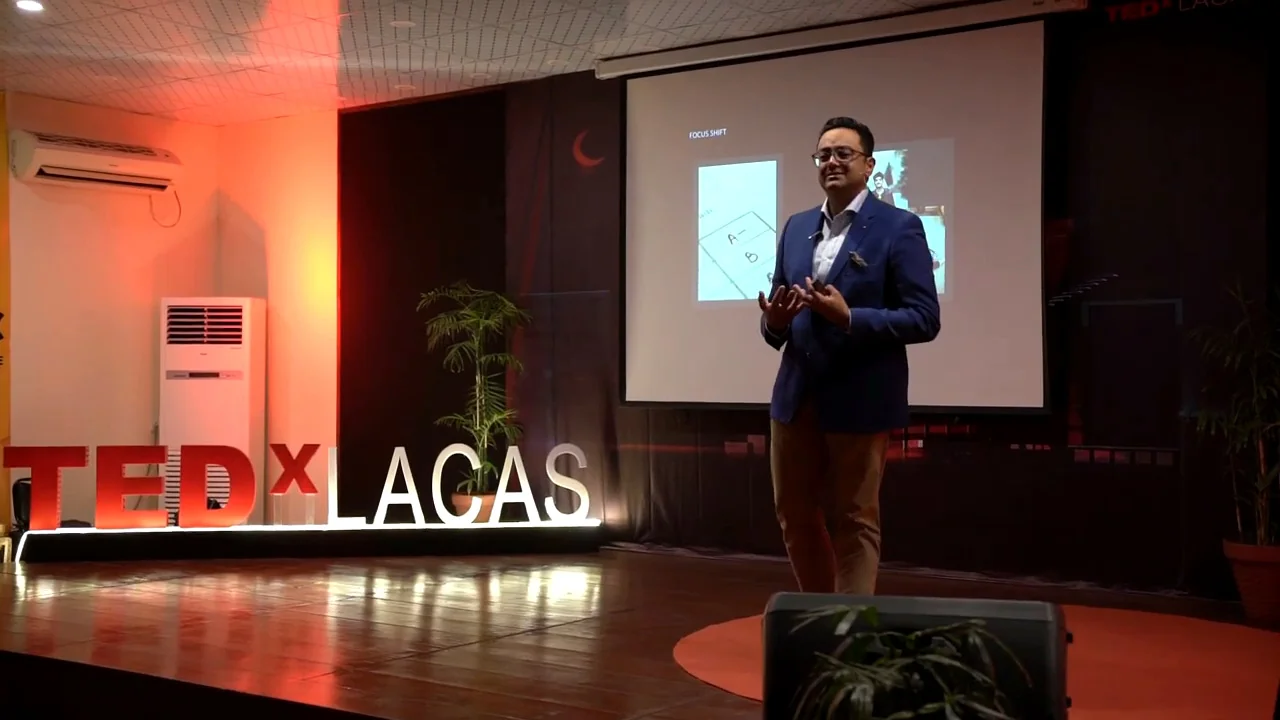
In 2024, I spoke at TEDxLACAS about developing soft skills in students. It reflected a continuing interest in helping people build the capabilities that allow them to navigate uncertainty and participate more fully in the world around them.
I would like to do more in this area. For me, it is not a departure from the rest of my journey but another expression of the same interest in people and possibility.
08 / Still a work in progress
The journey is not finished yet.
I sometimes think of a life as a sketch that gains detail with every new experience. Medicine drew the first lines. Commercial healthcare, leadership and the different cultures I encountered added contrast and perspective. Denmark introduced another set of tools for looking at the same world.
The interesting part is that I cannot know what the finished picture would look like, and I no longer feel that it needs a single label. I remain interested in useful technology, good questions, unfamiliar ideas and the perspectives of people whose journeys differ from mine.
A conversation can change how we see something. That seems a good enough reason to keep having them.
An invitation
Good conversations can lead to interesting places.
If our experiences overlap, or if you see something differently, I would be glad to connect.
Return to the homepageYou can reach me at nimer@nimerfaiyaz.com.